Microsoft launches Decision-1 to compete in fast-growing AI decision model market
The new model aims to deliver fast, accurate decisions for routing and classification tasks, adding to a crowded field of specialized AI tools.
Microsoft joins the decision model race
Microsoft has entered the rapidly expanding field of AI decision models with the launch of Decision-1, a system built for quick, structured choices like classification and routing. Based on Alibaba's Qwen3.5-9B language model, Decision-1 claims top accuracy and speed in internal benchmarks 3. The release highlights a growing trend: specialized AI tools that make fast decisions rather than generate lengthy text.
What makes a decision model?
Decision models are a new AI category that score fixed answer options and return probabilities, letting software act immediately without parsing generated text. Unlike large language models (LLMs) that write prose, decision models output structured data like JSON, making them ideal for routing user queries, verifying content, or controlling AI agents. Microsoft frames Decision-1 as purpose-built for these decision-scoring roles 2.
Performance and benchmarks
In Microsoft's testing across 36 benchmarks covering nearly 150,000 questions, Decision-1 achieved the highest average accuracy at 83.5%, beating other decision models and LLMs 3. It also recorded a p50 latency of 85 milliseconds, making it 2.5 times faster than runner-up H2O-Lightning-4B and 35 times faster than GPT-6 Sol 2. However, some benchmarks were vendor-run, and calibration scores varied, with Decision-1 placing second to Quyet-1.0-Large .
Pricing and availability
Decision-1 is available through OpenRouter and Microsoft Foundry, priced at $0.042 per million input tokens with output tokens free. This low cost aims to make decision intelligence accessible for developers integrating AI into workflows. Microsoft plans to rebase future versions on other models like MAI and OpenAI's systems 3.
Competitors and context
The decision model trend started with startup Jev in mid-September, prompting rapid adaptation from open-source communities. Microsoft's entry follows competitors like OpenAI and Cloudflare, which have also released decision-focused models. Satya Nadella announced the launch on X, stating the model is already being tested across Microsoft for incident management and other tasks 1.
Key facts
- Decision-1 is based on Alibaba's Qwen3.5-9B language model
- Achieved 83.5% average accuracy across 36 benchmarks
- 2.5 times faster than runner-up H2O-Lightning-4B
- Priced at $0.042 per million input tokens with free output tokens
- Available via Microsoft Foundry and OpenRouter
Seen on social
Introducing Microsoft-Decision-1, our new model for fast decision-making. It delivers top performance on structured decision tasks, outperforming both LLMs and other decision models in latency and quality. We’re already testing it across Microsoft for everything from incident… pic.twitter.com/M3fAOD90r6
— Satya Nadella on X, see the post
Sources
- Microsoft's Decision-1 model enters the fast-growing AI decision model race — the-decoder.com
- Microsoft-Decision-1: Our model for fast decision-making
- Microsoft AI Releases Microsoft-Decision-1: A Qwen3.5-9B Decision ... — marktechpost.com
- Introducing Microsoft-Decision-1 in Microsoft Foundry for decision and ...
- Microsoft Decision-1 in Foundry: Fast AI Classification Model ... — windowsforum.com
Related stories
 New modelsLiquid AI Unveils d1-ultra Decision Model Ranking 1 on AI BenchmarkHerald of AI
Liquid AI Unveils d1-ultra Decision Model Ranking 1 on AI Benchmark
The new model reads text and images to answer questions with probabilities instead of generating text, cutting costs for developers.
 How it worksGraphicle brings fast code graphs and memory to coding agentsHerald of AI
Graphicle brings fast code graphs and memory to coding agents
A Rust rewrite of Graphify runs on your own machine and helps Claude and other AI coding assistants understand your project.
 How it worksClawLoop AI agents that teach themselves to get betterHerald of AIFigure: Yang et al., arXiv:2610.14118, CC BY 4.0
ClawLoop AI agents that teach themselves to get better
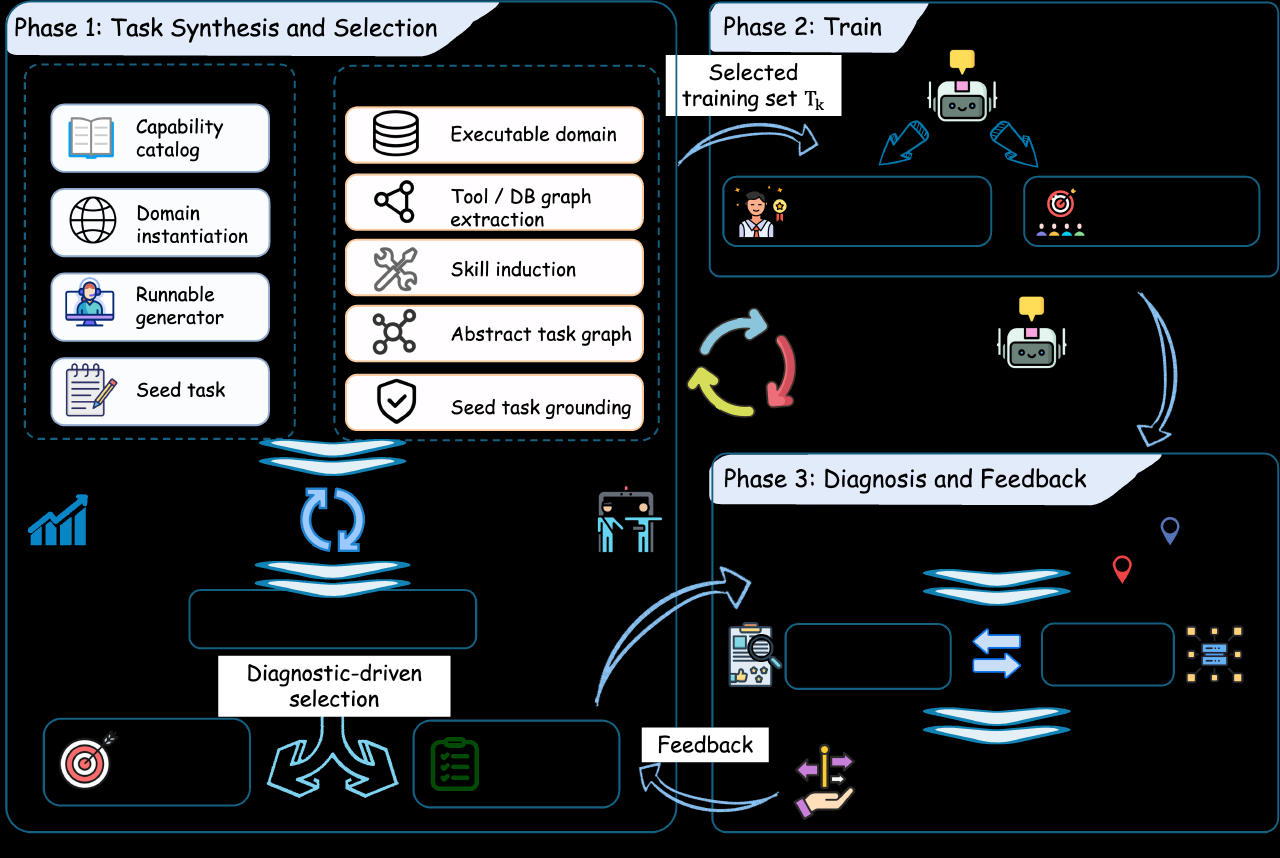
A new training framework lets AI agents improve on their own without a stronger teacher model guiding every step.
 How it worksAI model breaks the two-week weather forecast barrierHerald of AI
AI model breaks the two-week weather forecast barrier
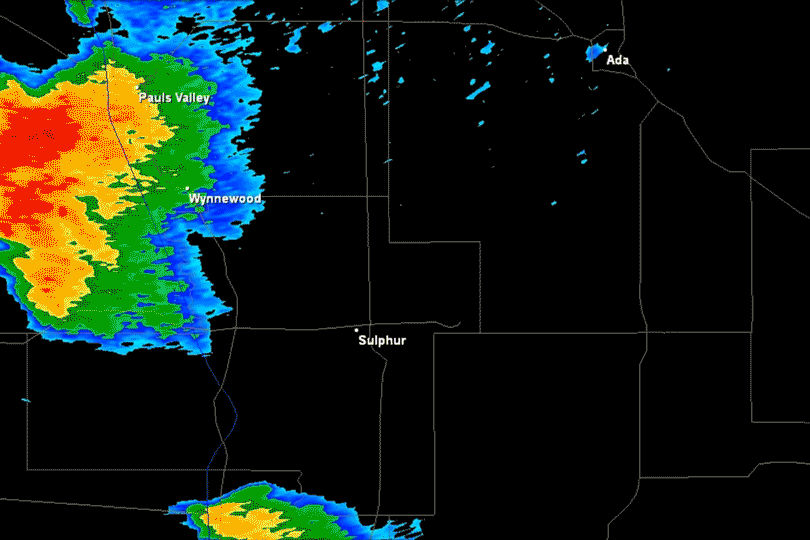
Researchers use machine learning to correct forecast errors, doubling accuracy for the difficult two-to-six-week range that matters for emergencies and energy planning.