AI Is Shrinking the Animation Pipeline for Indie YouTube Creators
A new wave of AI video tools lets solo creators turn a script into a finished cartoon, collapsing a process that once required a studio.
The Old Way Was Expensive
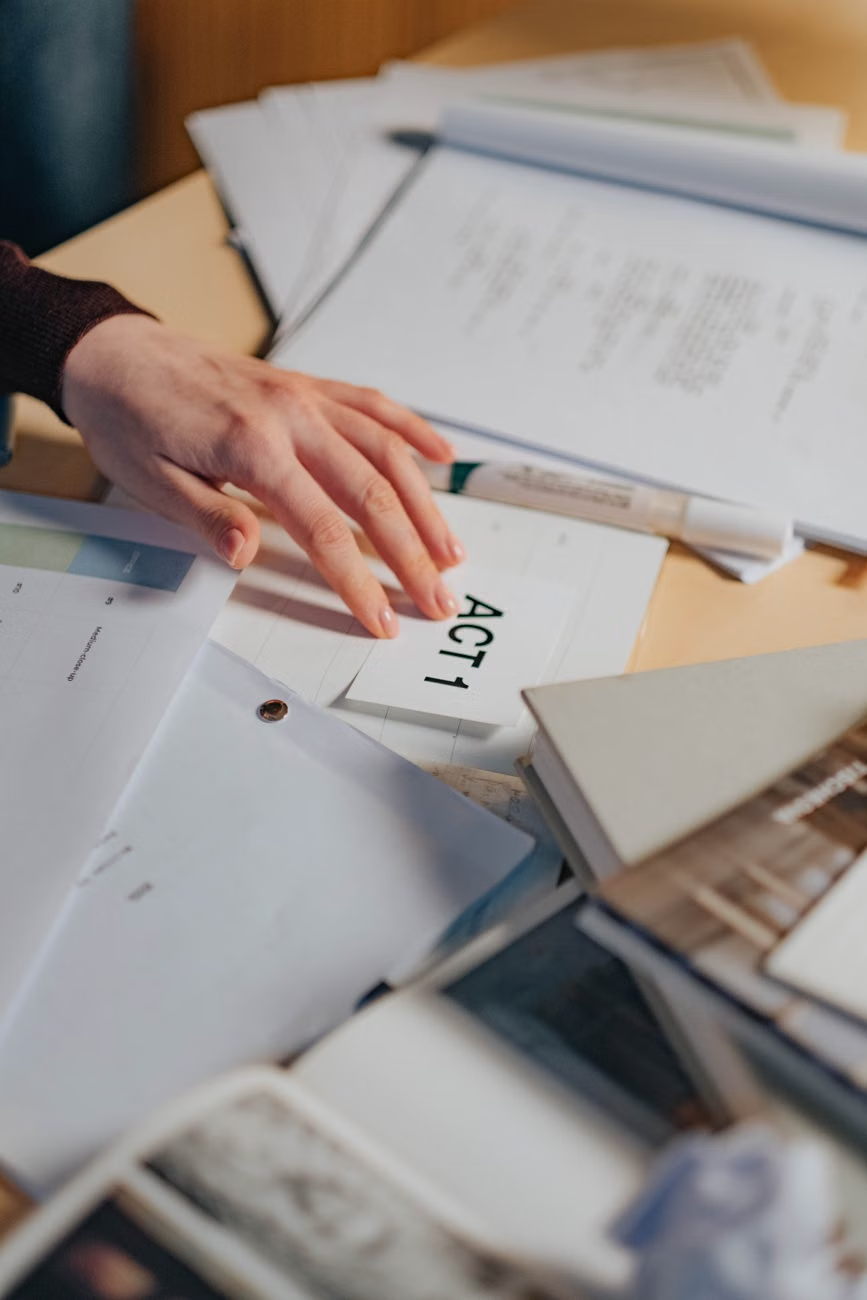
For most of the internet's history, animation has been the priciest way to tell a short story. A two-minute cartoon used to demand a storyboard, a character sheet, a voice actor, an animator working frame by frame, and a sound pass 1. That is why so many ideas on YouTube ended up as talking-head videos or slideshows: the creator had the story but not the studio .
Now that gap is closing. A new wave of AI video tools can take a written script and return a narrated, animated video — and the results have moved from interesting demo to something creators actually publish 1.
The Consistency Problem That Took Years to Solve
The first generation of AI video generators was good at single shots: you could type a prompt and get a five-second clip of a fox in a snowy forest. But ask for a second shot of the same fox and you got a different animal — new face, new colors, sometimes a new species 1. For a one-off clip that works; for a story it was fatal, because audiences follow characters, not shots .
That wall pushed the industry toward tools that treat a video as a sequence of scenes, where the cast is defined once and the design stays locked across every scene 1.ToonBee AI is built around exactly this flow: a script goes in, the same character holds its face from the first scene to the last, and voiceover and music are added before download .
Who Is Actually Using It
The early adopters are not big studios. They are people who never had access to animation in the first place 1. Story and faceless channels are turning history, mythology and folk tales into animated shows with a recurring narrator instead of relying on stock footage . Parents and teachers use it to turn kitchen-table bedtime stories into classroom videos where the hero stays recognizable from the first page to the last . Small businesses and comedy creators are also adopting the format for explainers and thirty-second sketches .
What It Still Can't Do
The hype tends to skip the limits. Fine acting — subtle expressions and precise timing — still comes out better from a human animator. Complex action with fast camera moves often needs multiple tries 1. And the script is still everything: an AI pipeline removes the production bottleneck, not the writing one . Creators should also check each tool's terms before publishing commercially, because rights vary by plan .
Practical Tips for Getting Started
Start with a sixty-to-ninety-second script and write it scene by scene so the generator gets clean instructions. Lock the main character design early, decide the platform format before generating, and compare pricing by the scene rather than by the subscription plan 1.
If you want to see how far the format has come, try an AI cartoon video generator with a story you already know well 1.
Key facts
- A traditional two-minute cartoon once required a storyboard, character sheets, a voice actor, frame-by-frame animation, and a sound pass.
- Early AI video generators produced beautiful single shots but could not keep a character's face consistent across scenes.
- Modern AI animation workflows define the cast once and maintain that design across every scene.
- Most AI cartoon output includes narration and music already laid underneath, delivering a finished video instead of raw clips.
- Fine acting and complex fast action remain harder for AI than human animation.
Sources
- How AI Is Changing Indie Animation on YouTube — nerdbot.com
- What It Really Takes to Produce an Independent Animated Pilot — nerdbot.com
- I Made a FULL Cartoon With AI | Complete AI Animation Pipeline 2026