Simon Willison Codes a Game With One Prompt to Claude
A blogger proved that 'vibe coding' can produce a surprisingly polished Three.js game in just one conversation.
Prompting a Game Into Existence
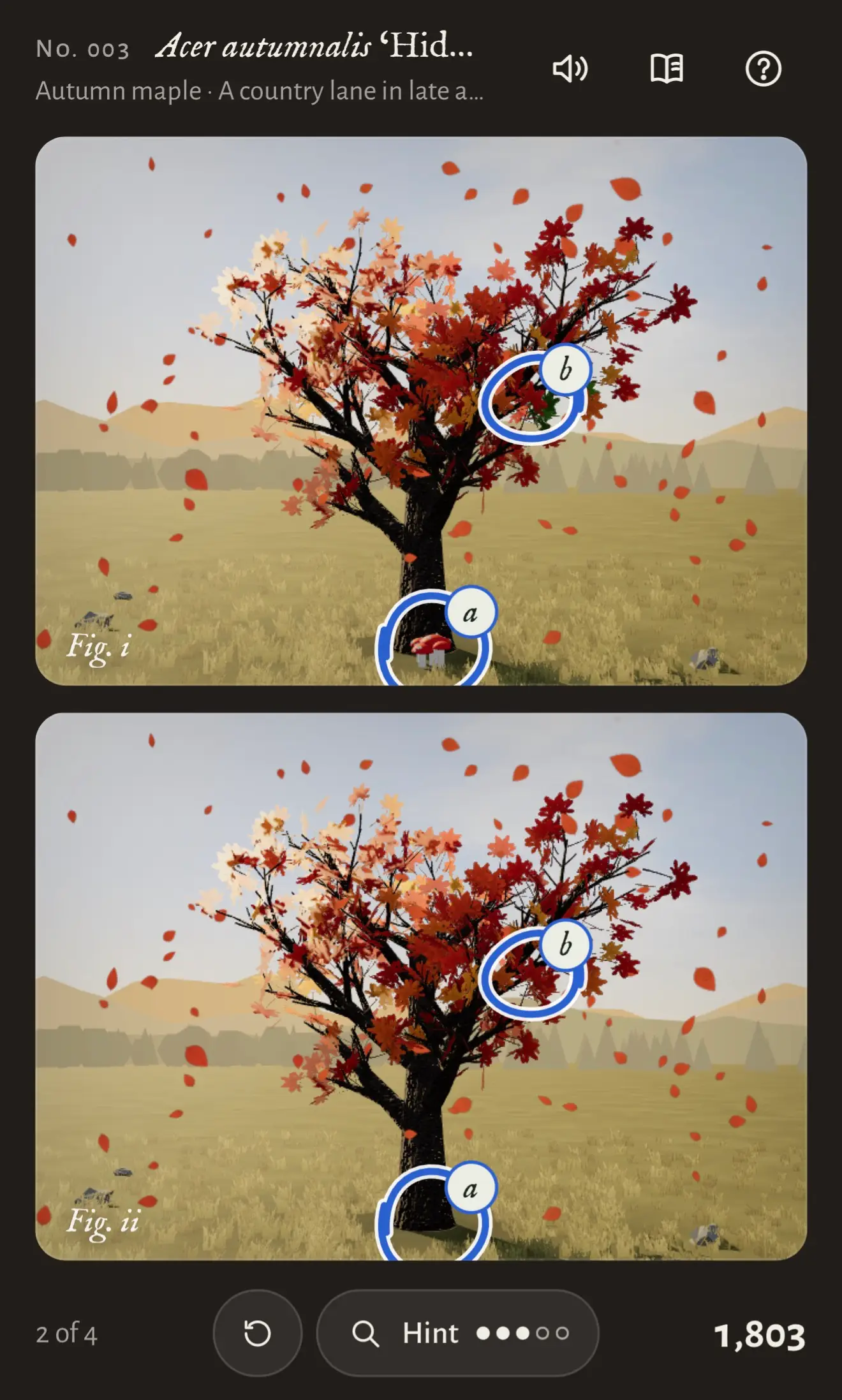
Simon Willison turned to Claude Opus 5.5 last week with a deceptively simple request: build a Three.js game called Tree Appreciator where players compare two algorithmically generated trees and appreciate the differences between them.
What happened next was less engineering and more alchemy. The model spent 3 hours and 7 minutes processing before delivering a complete, playable game complete with music, animation, and achievements.
Willison — known for his experiments at the intersection of AI and creative tools — admitted to finding the result \"somewhat embarrassingly\" good given his own recent talks about the unpredictability of AI generation. The game, he noted, is \"quite compelling to play.\"
The Vibe Coding Philosophy
The project falls squarely into what Willison has been calling \"vibe coding\" — the practice of describing desired outcomes in natural language and letting an AI model figure out the implementation details.
\"I've found that telling Opus 5.5 'make sure it is fun' works uncomfortably well,\" Willison wrote on his blog on October 14th. The implication is clear: when you give an AI model creative direction rather than technical specifications, it sometimes produces something that feels genuinely delightful.
The resulting game asks players to spot differences between two procedurally generated trees. While the concept is straightforward, the execution — with its polished audio, smooth animations, and achievement system — demonstrates what happens when powerful language models take creative direction seriously.
What This Means for Creators
The experiment raises interesting questions about the future of game development. If a single prompt can produce a finished, animated game with sound and interactivity, does the barrier to entry for creating interactive experiences continue to shrink?
Willison's work suggests the answer is yes — but with caveats. The process took over three hours of computation, and the result, while impressive, required him to guide it with natural language rather than write traditional code.
For now, the project stands as a proof of concept: AI models can take creative briefs and deliver functional, even charming, interactive experiences. Whether this represents the future of game design or merely a clever party trick remains to be seen.
Key facts
- Claude Opus 5.5 spent 3 hours and 7 minutes generating the game
- The game features procedurally generated trees with music and animations
- Simon Willison used the iPhone app's chat mode, not Claude Code
- Achievements and spot-the-difference mechanics are included
- The project demonstrates 'vibe coding' — creating through natural language prompts
Sources
Related stories
 How it worksHow the Claude Code team reinvented code review with AIHerald of AI
How the Claude Code team reinvented code review with AI
The team behind Anthropic's coding agent says Claude now catches most routine mistakes before a human ever looks at the code.
New AI plugin lets Claude design PCB boards inside KiCad 10
Konnect is a free open-source plugin that lets an AI assistant place components, route circuits and export manufacturing files directly inside KiCad.
 How it worksGraphicle brings fast code graphs and memory to coding agentsHerald of AI
Graphicle brings fast code graphs and memory to coding agents
A Rust rewrite of Graphify runs on your own machine and helps Claude and other AI coding assistants understand your project.
 PeopleSimon Willison builds two-player pong game that communicates via audio chirpsHerald of AI
Simon Willison builds two-player pong game that communicates via audio chirps
The AI educator used Claude Opus 5.5 to create a game where two phones exchange moves through sounds played through the microphone.